
Plan on 12 to 18 months from your first serious conversation with a builder to moving in, and somewhere between 8 and 14 months of that for actual construction. A simpler plan on a ready lot in a Greenville County subdivision sits at the short end; a large or highly detailed home on raw rural land with a long driveway, a well and a septic system sits at the long end.
The construction number is the one most people ask about, but it is rarely what decides your move-in date. The months before the first load of gravel arrives, when the design gets finished, priced and permitted, are where schedules are won or lost. Here is how the time actually breaks down, phase by phase, and what stretches or shrinks each piece on an Upstate lot.
The timeline, phase by phase
These are the ranges we publish on our build process page, and they hold up well for most custom homes we build in Greenville, Greer, Taylors and Simpsonville. Some phases overlap on purpose, which is why the weeks don’t simply add up end to end.
Discovery and site visit: weeks 1 to 2
A walk of the property, a frank talk about budget, and a written summary of scope. If you don’t own land yet, this is also when a builder should look at the lot you’re considering before you close on it. Finding out that a parcel needs a long gravel drive, a retaining wall or an engineered septic system before you buy is worth more than any schedule trick later.
Design and planning: weeks 3 to 10
Floor plan, elevations, structural coordination, and then the finish selections: flooring, cabinets, fixtures, roofing, siding and windows. It ends with a detailed line-item proposal and a signed contract. This phase moves at the speed of your decisions. Families who come in with a clear list of must-haves and a few photos of homes they like often finish near the eight-week mark. Families who redraw the kitchen four times run longer, and that is fine, as long as everyone expects it.
Pre-construction and permitting: weeks 8 to 14
While the drawings are in for review, the schedule gets built, trade partners are locked in, and long-lead materials get ordered. Our process page notes that permits in Greenville typically take 4 to 6 weeks and Spartanburg 3 to 5, but treat those as planning numbers, not promises. Your county or city building department sets the pace, and an incomplete application restarts the clock. If your neighborhood has an HOA architectural review, submit to them early; their approval often has to come before the permit application, and some committees meet only once a month.
Construction: months 3 to 12 and beyond
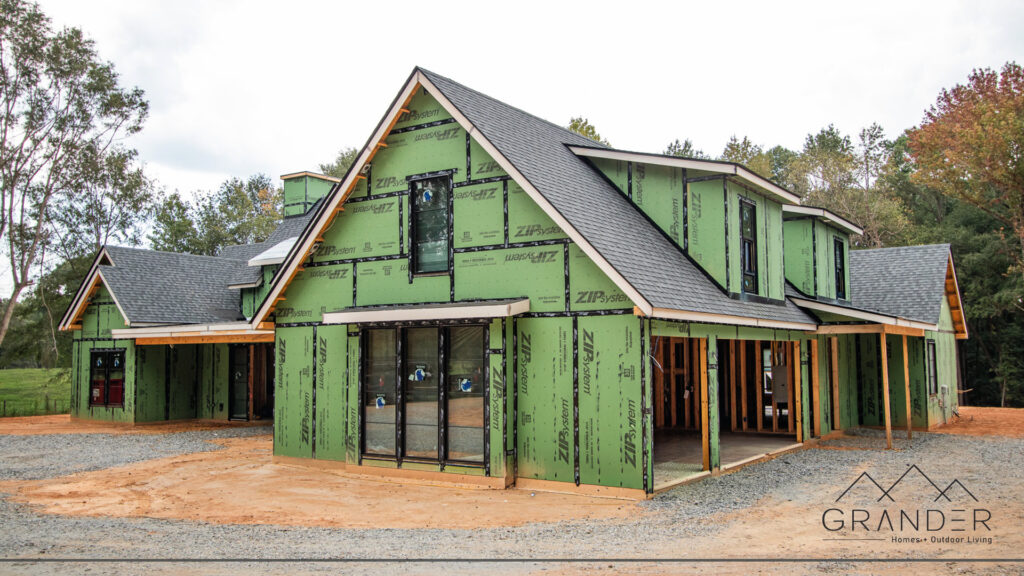
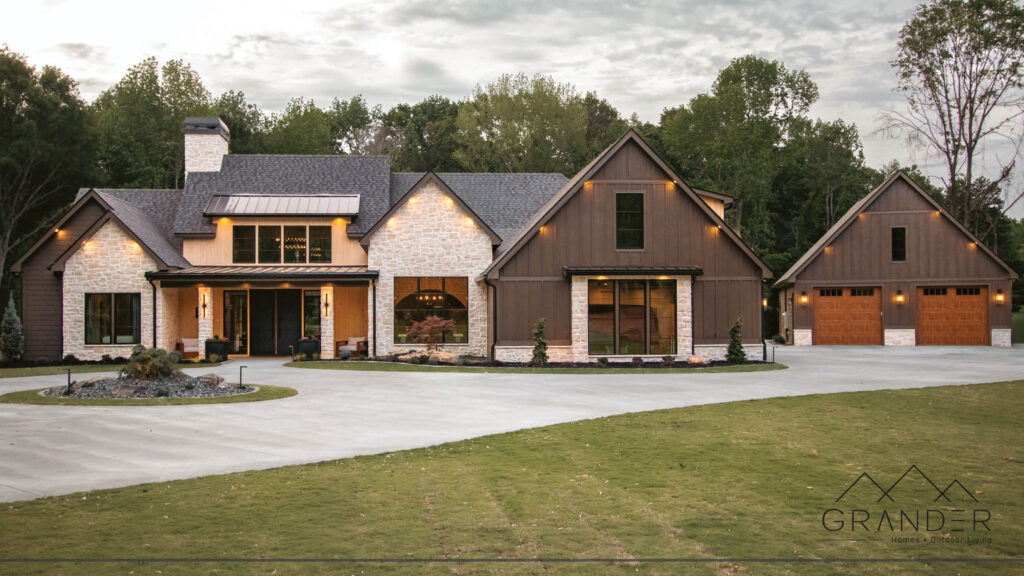
Site work and foundation, framing, roof and windows, then the rough-ins for plumbing, electrical and HVAC. After inspections come insulation, drywall and siding, then cabinets, trim, flooring and fixtures. Our build process page puts most custom homes at 8 to 14 months of construction. A roughly 2,500 square foot home with a straightforward roofline and standard finishes trends toward the shorter end. Complex rooflines, lots of custom millwork, stone exteriors and very large footprints push toward the longer end.
Completion and handover: the final 2 to 4 weeks
Final inspections and the certificate of occupancy, the punch list walkthrough, final grading and cleanup, and an orientation on how the home’s systems work. Don’t schedule movers for the day after the projected finish. Give yourself a buffer of a couple of weeks.
What stretches the schedule on an Upstate lot
Most delays we see are predictable once you know where to look. These are the big ones in our part of South Carolina.
- Raw land. A lot without utilities at the road adds steps: a perc test and septic design, a well, a power line extension from the utility, and sometimes a driveway permit. Each has its own calendar. Our post on buying rural land with septic and wells walks through these.
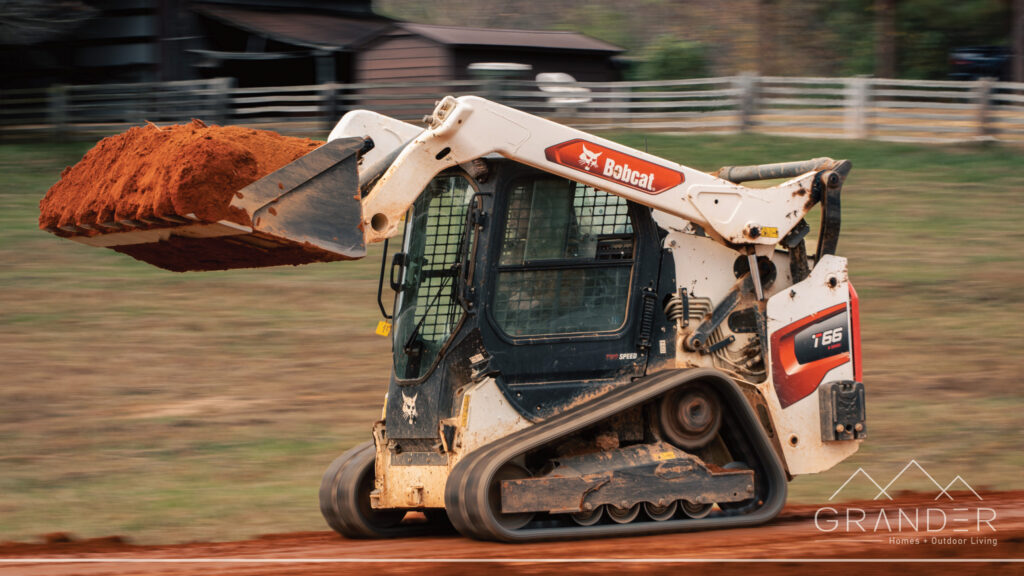
- Slope and red clay. A sloped lot means more grading, possibly retaining walls, and foundation work that can’t start until the pad is stable. Clay also turns to soup after heavy rain, and equipment can’t work it until it drains and dries.
- Rain. A wet stretch in spring can cost a week or more during site work and foundation. Once the house is dried in, weather matters much less. Winter is less of a problem here than people expect; see building through the winter in the Upstate.
- Late selections. If the tile or plumbing fixtures aren’t chosen before construction starts, the trades will eventually reach a point where they can’t proceed. Finalize selections in the design phase whenever you can.
- Change orders. Moving a wall after framing or switching from a tub to a walk-in shower after rough plumbing costs time as well as money. We require written approval before any change affects cost, partly so that everyone sees the schedule impact before saying yes.
- Inspection scheduling. Each stage has to pass before the next one covers it up. A failed inspection or a busy inspection calendar can idle a site for a few days.
What actually shortens it
There is no way to rush concrete curing or skip an inspection, but you can remove the waiting that comes from indecision and surprises.
Pick your builder before you finalize land. A site evaluation before closing catches the expensive problems while you can still walk away or renegotiate. Choose a builder who handles design in-house, or an architect who works closely with your builder, so pricing happens alongside drawing instead of after it. The trade-offs between those two routes are covered in our design-build vs. architect and builder comparison. Make your selections early and in batches. And plan the start date around your life rather than the calendar: a spring groundbreaking is pleasant, but a fall or winter start often means you are dried in before the spring storms and moving in before the next holiday season.
Questions we hear about custom home timelines
Can I live on the property while the house is built?
Sometimes, in a camper or an existing house on the parcel, but check your county’s rules and your HOA covenants first. Many neighborhoods prohibit it outright, and rural parcels may have limits on temporary residences.
How much time should I add if I haven’t bought land yet?
Allow a few extra months. Finding the right lot, getting a survey and soil evaluation, and closing can take as long as the design phase, and you can’t finalize a site plan until the land is yours.
Is a barndominium faster to build than a traditional custom home?
Often a little, because the framing and roof are simpler, but the interior finishes take just as long as in any house. Our comparison of barndominiums and traditional custom homes covers the other differences.
Will I get updates during construction?
You should insist on it from any builder. Our clients get weekly progress updates, so a weather delay or a back-ordered window is never a surprise.
Start with a realistic date
If you’re thinking about building in Greenville County, the earlier the conversation starts, the more control you have over the finish date. Tell us about your lot or the area you’re looking at, and we’ll give you an honest timeline for your project, not a sales number. Request an estimate online, or call us at (864) 412-9999. You can also see the homes we design and build on our custom homes page.